
Jaee Patil Jabulee
10 Minutes Read
Every parent knows the scene: that blessed, sudden silence when a colorful animation appears, locking your energetic child's gaze to a screen. In our digital world, screens have become a modern parenting lifeline—a babysitter during dinner prep, a peacekeeper during a meltdown, and guaranteed quiet on a long drive.
But here is the gut check: What is all this convenient calm doing to your child's developing brain, especially during the crucial early years of childhood.
At Giggles, we believe in the power of deep connection and active, multi-sensory play to build a strong foundation for your child. While screens are not evil, they are not neutral either. When passive consumption replaces active exploration, problem-solving, and social interaction, it impacts the millions of neural connections that are shaping your child’s future.
This is not about eliminating screens entirely — that is not realistic! It is about creating a mindful balance that allows your child to thrive digitally while building the cognitive and social resilience they need for lifelong success.
What happens when your children spend time in front of the screen?
During the early and middle childhood years, your child’s brain is a construction site, building the architecture for all future learning. Excessive screen time can actually reduce the development of critical neural pathways.
- The Executive Function Gap: The prefrontal cortex is the brain's CEO, responsible for executive functions like planning, problem-solving, and impulse control. Passive screen time primarily activates the brain’s reward center (hello, dopamine hit!), but it largely leaves the CEO's office unstimulated.
- Memory Becomes Stronger: Pretend play — like cooking with toy utensils or caring for a doll — strengthens the brain’s memory networks. Children who engage in imaginative play develop sharper memory and reasoning skills that support early learning.
- Emotions Get Regulated: Play lowers stress hormones like cortisol and releases endorphins, creating the perfect environment for growth. Through playful challenges, children learn how to handle joy, frustration, and excitement — building lifelong emotional balance.
- Their Brain Becomes More Efficient: In early childhood, the brain keeps the strongest connections and lets go of unused ones — a process called synaptic pruning. Rich play experiences ensure creativity and intelligence stay deeply wired for life.
How Play Shapes Every Part of Development
From resilience to focus, every kind of play builds more than toys — it builds the foundation of your child’s personality.
- They become better problem solvers: Children who explore freely learn to experiment and find multiple ways to solve a problem. That is why Giggles encourages open ended play — where there is no single “right” answer, only discovery and joy.
- They grow up to be emotionally smart and socially confident: Group play, pretend roles, and shared laughter help children understand empathy, cooperation, and communication. Emotional intelligence begins on the play mat, not the classroom bench.
- School Ready Minds: Playful learning strengthens attention, language, and early math skills. When babies clap to beats, explore textures, or respond to rhymes, they are laying the groundwork for success in school.
- Stronger Bodies: Physical play improves balance, coordination, and motor control. That is why Giggles activities blend gentle movement, dance, and rhythm — helping babies grow in body and mind together.
How Giggles Turns Play Into Brain Building Magic
At Giggles, every activity is designed to nurture your baby’s body, mind, and emotional connection with you.
- Screen Free Connection: Our audio guided sessions allow you to stay fully present with your baby — no screens, just rhythm, touch, and smiles.
- A Blend of Tradition and Science: Inspired by Carnatic tabla bols and classical melodies, Giggles uses rhythm to boost brain development and bonding. Each of our 12 joyful activities supports sensory, motor, and emotional growth in harmony.
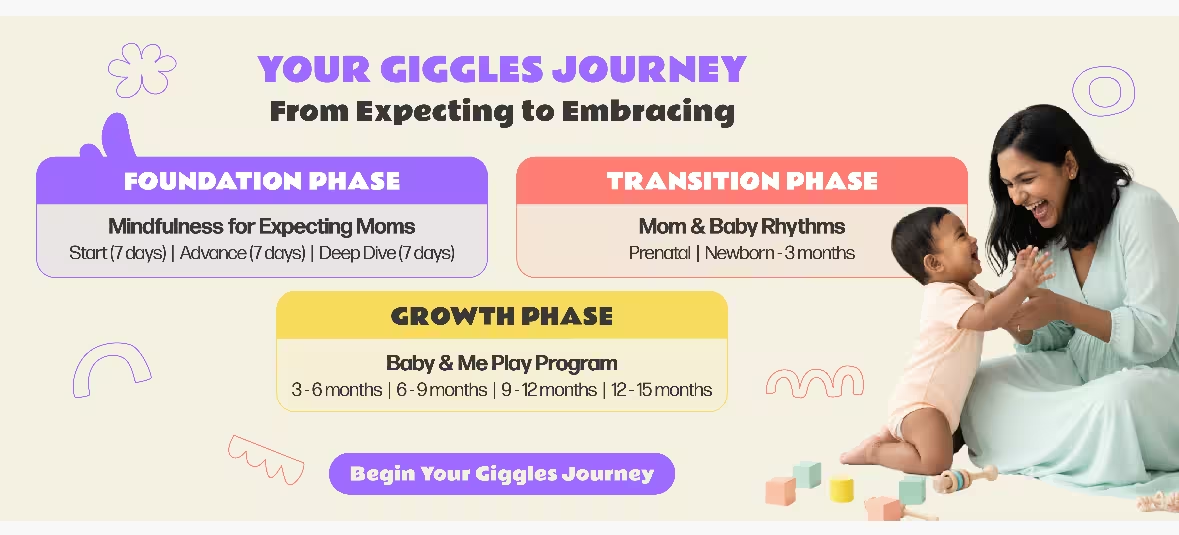
- Stage Wise Learning: Structured into four progressive stages for babies aged 3 to 15 months, each phase aligns with natural emotional and physical milestones.
- Easy to Follow, Everyday Integration: Step by step tutorials in our app help you weave these activities into daily routines — during bath time, feeding, rest, or play.
Why Your Role Matters So Much
When you join your baby in play, you are not just a parent — you are their first teacher, cheerleader, and safe space.
- You strengthen emotional bonds. Your voice, laughter, and presence make your baby feel secure and connected.
- You model life skills. When you stay calm after a toppled tower or giggle through mistakes, your baby learns resilience and joy.
- You amplify learning. Babies learn faster when you play with them — they mirror your emotions, words, and actions.
Play Is the Most Powerful Gift You Can Give
Every giggle, every rhythm, every shared smile is building more than memories — it is building your child’s brain, heart, and future. When you play, you are shaping how your child thinks, feels, and connects with the world.
At Giggles, we are here to help you make those moments effortless, meaningful, and filled with laughter. Because when parenting meets play — learning becomes love in motion.Ready to Begin? Explore the Giggles Parent Infant Program — where ancient rhythms meet modern science to make early parenting fun, mindful, and developmentally rich.
👉 Learn More & Download the
Giggles AppJaee Patil Jabulee
Giggles is a screen free, research based program that helps you bond with your baby through simple music, movement, stories, and calm play.
.svg)
.svg)
.svg)
.svg)

.svg)
.png)
.svg)
.svg)
.svg)
.svg)
.svg)
.svg)
.svg)
.svg)
.svg)
.svg)
.svg)
.svg)
.svg)